London Notes
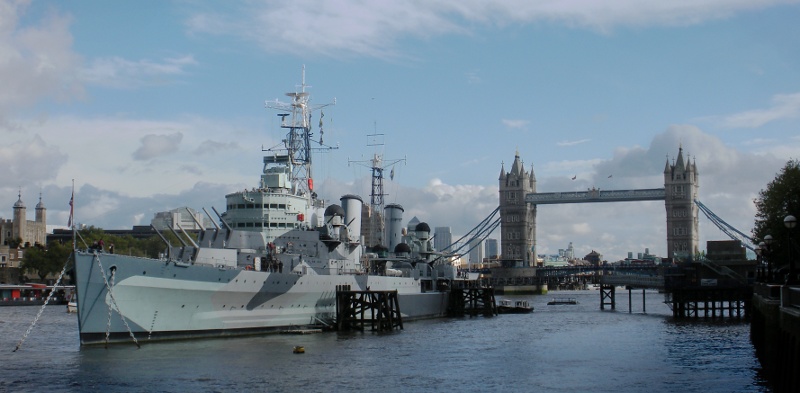
HMS Belfast, seen here with Tower Bridge in the background, was commissioned in 1939 and was the largest and most powerful Royal Navy cruiser of its time. It saw action throughout the Second World War, taking part in the destruction of the German warship Scharnhorst and the Normandy landings. Following WWII, the Belfast saw action during the Korean war and other operations. It entered reserve in 1963 and is now a branch of the Imperial War Museum and is open to the public.
War & Peace
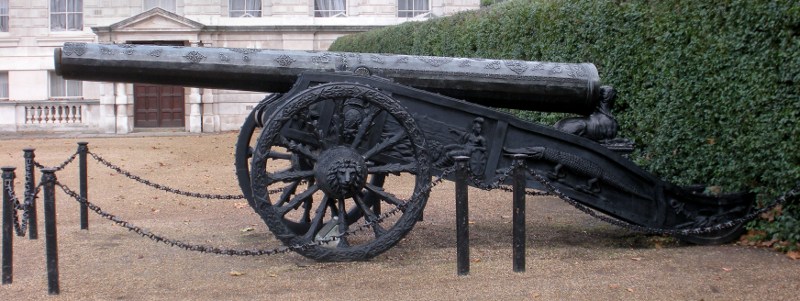
a Turkish cannon made in 1524 "by Murad son of Abdullah, chief gunner". Captured in Egypt in 1801
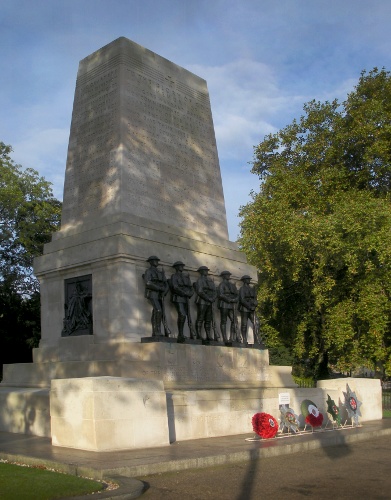
The Guards Memorial commemorates those members of the five regiments of His Majesty's Foot Guards who died in World War I. The sculptures, representing actual Guardsmen, are cast from captured cannon.
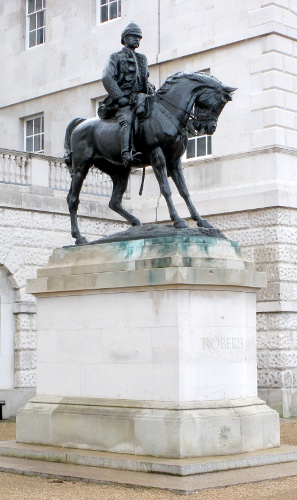
Field Marshal Roberts. Field Marshals Kitchener and Wolseley are also remembered with monumuments on the Horseguards parade ground.
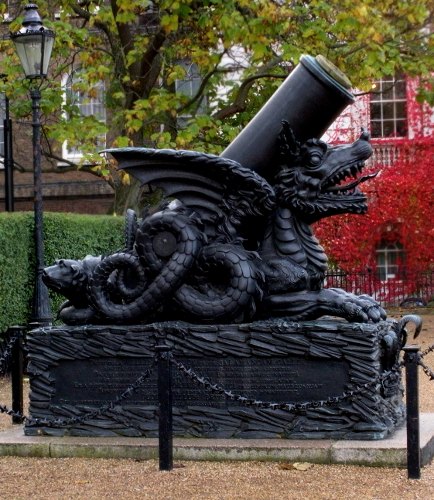
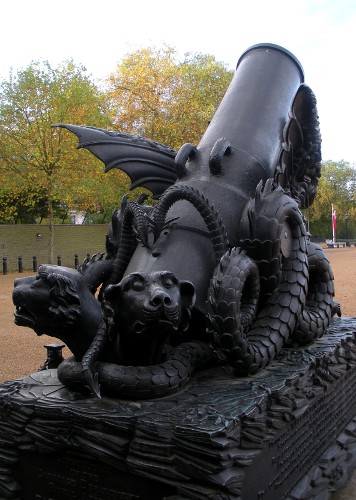
This mortar was left by the French on their retreat from Cadiz and was taken at Salamanca in 1812. It was subsequently sent by Spain to his Royal Highness the Prince Regent to record the victory at Salamanca, the end of the seige of Cadiz, and the consequent liberation of the south of Spain, and in honour of the Duke of Wellington. It was the largest of the mortars used in the seige and it was said to be capable of throwing a shell 16 miles.
Scroll down or use this [ link ] to jump to a description of the carriage designed for the display of the mortar.
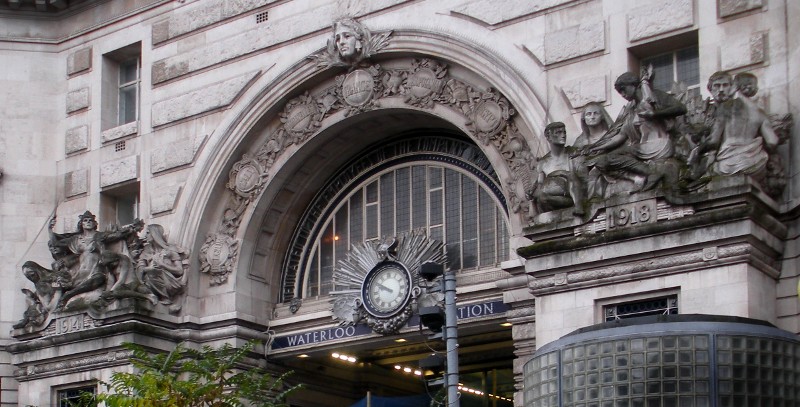
First World War Memorial above the entrance to Waterloo Station. Inside the station you will find four large panels listing the names of 585 company employees who lost their lives in the First World War.
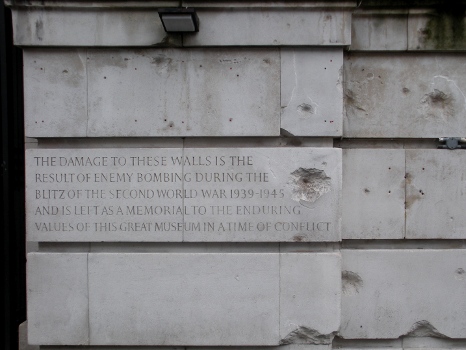
On a wall of the Victoria and Albert Museum: a stark reminder of the violence of war and what might be lost.
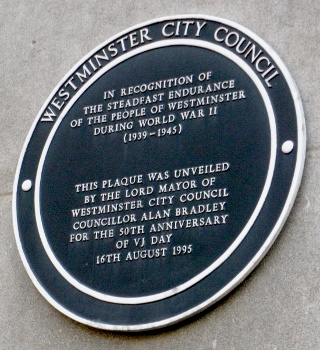
Honouring the civilians who endured the bombardment of their city.
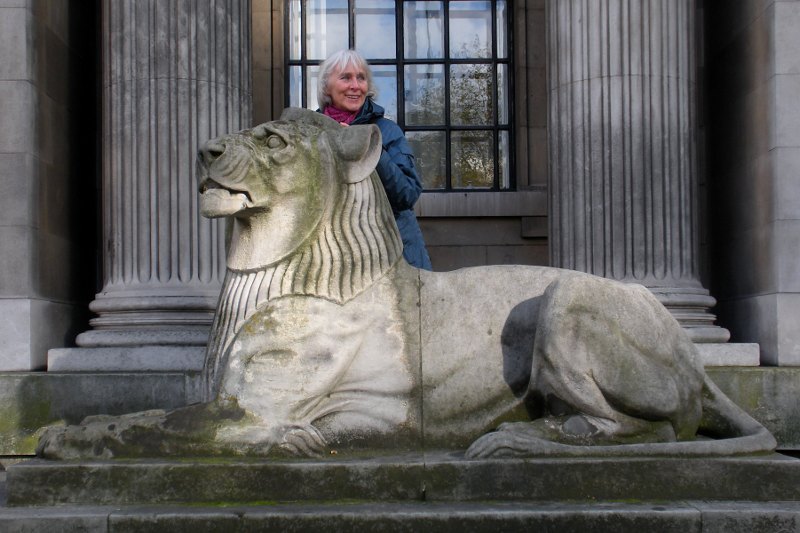
Peace: Lion and lioness. Proud heritage.
"An emblem has been selected (in allegorical allusion to the means by which the siege of Cadiz was terminated) from the labours of Hercules, who destroyed the monster Geryon, the tyrant of the Isle of Gades, thus figuratively describing the raising of the siege, and to illustrate the fame of the hero who had broken the enchantment of the modern Geryon. Some liberties have been taken with the principal figure in substituting wings for the heads; the tail twists round to the vent in order to convey the scorpion fire. The heads of the tyrant's guardian dog are represented in the alternate state of activity and repose, to denote eternal watchfulness. The mortar is left as it was found, being mounted on its carriage at an elevation of 45 degrees, upon a bed of brass, representing a rock on which the monster has alighted.
DIMENSIONS.--Length of the bed, 9feet 2 inches.--Breadth of ditto, 4 feet 6 inches.--General height, 9 feet 10 inches,--Weight of the whole, 16 tons."
source:
Source: Leigh's New Picture of London.
Printed for Samuel Leigh, 18, Strand;
by W. Clowes, Northumberland Court. 1819
complete book available online:
https://archive.org/stream/leighsnewpictur01leiggoog#page/n8/mode/2up
or
Just the description of the mortar:
http://www.londonancestor.com/leighs/pb-jampark.htm
links accessed: 2013 January 8
[ back ]